When I read an article which wrote about plants chattering with each other, I could not believe it at first. But, as I scanned through the information discussed, I got surprised about the fact that plants do send signals to each other to warn of upcoming danger.
Sunday, April 1, 2012

Tuesday, March 27, 2012
Breathtaking Butchart Gardens, Too Beautiful to Ignore
I got the chance to finally visit the world famous Butchart Gardens...I would say this was a wonderful reward after taking charge of a job as a wedding photographer to my friend's wedding. Telling you about one of the gorgeous gardens in the world is an understatement. You can only fully experience the treasures that the Gardens hold once you visit the place.. The moment you step inside the 'Waterwheel Square' entrance, there are already tons of flowers showing off their blooms to any visitor. It is like a parade of petunias, peonies, and tulips as you saunter through the 'Top Walk' zone. As you walk further, see hanging baskets filled with fuchsias and bleeding hearts, its leaves lightly caressing your head as you go under it.
Moving along...as you walk past under the canopy of towering cedars and some dense foliage, at the end of the short walk, the 'Sunken Garden' welcomes you. Each season, one will get to witness various displays of blooms that captivate the eyes with their explosion of colors, fragrances that linger and an unusual feeling of relaxation and at the same time....excitement.
Anyway, my words are not enough to make you see what I want you to see. So here are some of the photos I took of the Gardens. Enjoy!


The image on the left is the 'Sunken Garden.' I took this photo from the Sunken Garden lookout. It is like into Wonderland...
The gardens at Butchart were created from the ideas of the late Jenny Butchart. She began to transform the 55-acre gardens in 1904. The Gardens consist of 5 other gardens.
Moving along...as you walk past under the canopy of towering cedars and some dense foliage, at the end of the short walk, the 'Sunken Garden' welcomes you. Each season, one will get to witness various displays of blooms that captivate the eyes with their explosion of colors, fragrances that linger and an unusual feeling of relaxation and at the same time....excitement.
Anyway, my words are not enough to make you see what I want you to see. So here are some of the photos I took of the Gardens. Enjoy!


The image on the left is the 'Sunken Garden.' I took this photo from the Sunken Garden lookout. It is like into Wonderland...
 |
| Star Pond of Italian Gardens area |
1) Jenny's private garden
2) Sunken Garden
3) Rose Garden
4) Bog Garden
5) Japanese Garden
2) Sunken Garden
3) Rose Garden
4) Bog Garden
5) Japanese Garden
 |
| one of the pink peonies visited by a bumblebee |
 |
double petaled tuberous Begonias
The magnificent pond in the Italian Gardens. A statue of Mercury is perched on a pedestal in front of the hedge.
      |
Monday, March 26, 2012
Materials Used for Composting
 Contrary to the thought that composting is hard, it's as easy as 1,2,3.....You just need to have the right ingredients in order to have the right nutrients for the plants to grow.
Thursday, March 22, 2012
Kitchen Items You can Use to Kill Weeds Organically

Tuesday, March 20, 2012
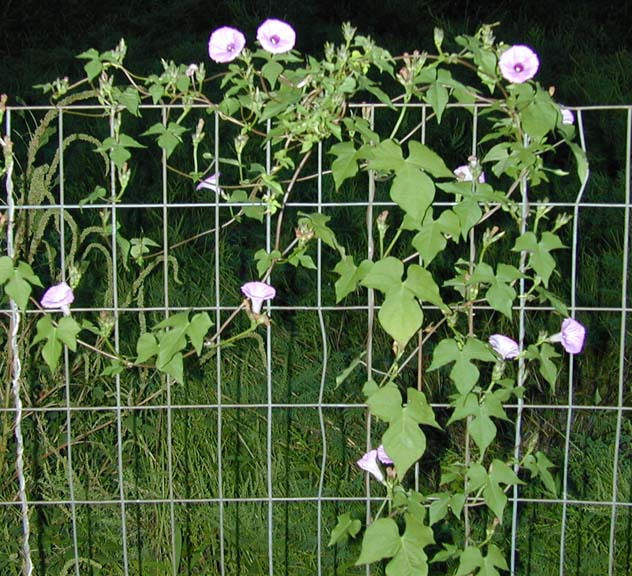
Weeds Week: The "Unfriendly" Morning Glory Weed
| photo from shutterstock.com |
 |
| photo from soilcropandmore.info |
But is there another way of getting rid of the morning glory weed? Yes there is!
For the morning glory weed to flourish, it has to have an unrestricted area to grow and spread. This is where the morning glory weed's weakness lies- it despises crowd.
Therefore, if you find the morning glory weed creeping along a bald patch of soil, fill that area up with plants that are suited for the location.If the area is somewhere in the lawn, cover it with landscaping grass of your choice. You have to literally be on top of the competition. Once the morning glory weed is overcrowded, it loses its capacity to outgrow every plant that gets in its way.
 And again...MULCH!
Mulching a bald area will work the same way as filling it in with ornamental plants. Mulch will restrict the sunlight from shining on exposed weed seeds and deprive it of sunshine as well as moisture. Pretty soon, it will rot and die.
Sunday, March 18, 2012
Weeds Week: Eliminate Dandelions the Organic Way
Dandelions like to grow in acidic soil, a pH of around 6.9 and lower. Once this nuisance of a plant will find a home in your lovely garden, it means war!
When I worked for a few months in the city of Regina, Saskatchewan, during summer time I noticed the huge dandelion blooms and 'seed heads' everywhere floating in the summer breeze. I once visited a friend who was busying herself with a dandelion remover. I told her that it is impossible to control the dandelions from invading her pretty little lawn for there were an 'umpteen' of the pesky puffballs already thriving in her garden. Plus, I observed her neighbor's lawn to be occupied with dandelions as well. You know what they say about dandelions, "if your neighbor has it, then expect it will come to you too." Luckily for me that time, I rented an apartment at a tenth floor so I just had a small container garden then and "0" dandelions.
Enough chit-chat, let's get to the nitty gritty details, how do we eradicate dandelions?
First and foremost, one should be aware that this weed has a strong taproot system (with several secondary roots branching out). The roots help the entire plant to anchor firmly in the ground. Once the weed is established in the soil, it then rapidly grows and flowers in early summer to late summer, and then produce seeds come fall. Unlike other plants, dandelions do not need the help of pollination to reproduce seeds. In fact, a dandelion reproduce through asexual means which explains why it spreads like wildfire.The seeds are attached to a parachute tail which assists in propagation.
TIP 1 - Controlling in Numbers
If your lawn is infested with dandelions, then I suggest you should secure:
1) a dark colored tarp
2) heavy stones
3) hot, boiling water
Pour boiling, hot water over the weeds and it will eradicate all parts of the dandelion down to its root level. Be careful not to pour the water on nearby plants or it will be damaged as well.
Cover the area with your dark tarp and secure the edges with the rocks. Lack of sunshine will disrupt the photosynthesis of the dandelion and will eventually kill it.
TIP 2 - Mowing Away
When dandelions are competing against your turf grasses and you want to eradicate them, use a lawnmower. Mow at the time when dandelions have not yet started to produce flower buds. Set your lawnmower at high to exclude cutting the grasses. Constant cutting of the leaves of this weed will also hamper its ability to make food and thus inevitably eliminate it from your garden. Dispose all the clippings in a sealed plastic bag before dumping it a compost bin to prevent the weed from reproducing.
TIP 3 - Dig Out
Do this tip only if the soil is moist and there are a few dandelions in your garden. Using a shovel or a garden knife, dig out the dandelion all the way to its roots. Use the tool as a lever to uproot the whole plant system.
| photo from naturewatch.ca |
When I worked for a few months in the city of Regina, Saskatchewan, during summer time I noticed the huge dandelion blooms and 'seed heads' everywhere floating in the summer breeze. I once visited a friend who was busying herself with a dandelion remover. I told her that it is impossible to control the dandelions from invading her pretty little lawn for there were an 'umpteen' of the pesky puffballs already thriving in her garden. Plus, I observed her neighbor's lawn to be occupied with dandelions as well. You know what they say about dandelions, "if your neighbor has it, then expect it will come to you too." Luckily for me that time, I rented an apartment at a tenth floor so I just had a small container garden then and "0" dandelions.
Enough chit-chat, let's get to the nitty gritty details, how do we eradicate dandelions?
First and foremost, one should be aware that this weed has a strong taproot system (with several secondary roots branching out). The roots help the entire plant to anchor firmly in the ground. Once the weed is established in the soil, it then rapidly grows and flowers in early summer to late summer, and then produce seeds come fall. Unlike other plants, dandelions do not need the help of pollination to reproduce seeds. In fact, a dandelion reproduce through asexual means which explains why it spreads like wildfire.The seeds are attached to a parachute tail which assists in propagation.
TIP 1 - Controlling in Numbers
If your lawn is infested with dandelions, then I suggest you should secure:
| photo from coolpics1234.blogspot.com |
2) heavy stones
3) hot, boiling water
Pour boiling, hot water over the weeds and it will eradicate all parts of the dandelion down to its root level. Be careful not to pour the water on nearby plants or it will be damaged as well.
Cover the area with your dark tarp and secure the edges with the rocks. Lack of sunshine will disrupt the photosynthesis of the dandelion and will eventually kill it.
TIP 2 - Mowing Away
When dandelions are competing against your turf grasses and you want to eradicate them, use a lawnmower. Mow at the time when dandelions have not yet started to produce flower buds. Set your lawnmower at high to exclude cutting the grasses. Constant cutting of the leaves of this weed will also hamper its ability to make food and thus inevitably eliminate it from your garden. Dispose all the clippings in a sealed plastic bag before dumping it a compost bin to prevent the weed from reproducing.
TIP 3 - Dig Out
Do this tip only if the soil is moist and there are a few dandelions in your garden. Using a shovel or a garden knife, dig out the dandelion all the way to its roots. Use the tool as a lever to uproot the whole plant system.

Tuesday, March 13, 2012
Prepare for Spring and your Garden will Thank you
 |
| Colorful_spring_garden.jpg |
As
I start to see a snowdrop popping out from anyone’s garden and even on
boulevards, I know that spring time will be here soon. Living in Victoria , British
Columbia
Gardens Alive Deal of the Day + $20 Off $40!
When
all the snow has melted, this is actually the perfect time when you can see the
whole outline of your garden since there are areas that are almost devoid of
plants. This is the right time to remodel your patio or maybe brighten up one
small corner in the yard.
Some
people dig through their garden tools and equipment and check on every piece
which needed to be polished or sharpened. In wintertime metal tools can collect
dust and rust rendering it inefficient when being used for gardening. One can
maintain the sharpness and the polished look of his tools by mixing any motor
oil with equal parts of builder’s sand. Rub this on the tools and then wipe it
with a dry cloth. It’s that easy.
Lawnmowers
also benefit from regular upkeep like inspection of its oil level and the
sharpness and overall condition of its blades. Also check your irrigation
systems (garden hose, fountains etcetera) for they may contain any insects
inside which sought shelter from the cold. Check if there are holes that might
cause leakages in the future which results to an increase in your water bill.
Once
all signs of winter are gone, you can now till the soil and perform amendments
to enrich it. Cultivating the soil enables air to go into it and circulate it
around the plants’ roots which is beneficial for their growth. Fertilize your
shrubs and trees with slow-release fertilizers. As the ground further warms up,
the fertilizers will also continue to provide food for your plants for a
bountiful blooming season in spring.
Adding
compost to the garden is even a clever idea. It fattens up the soil with
already dead organic matter making the garden more rich and further promotes
plants’ health.
Grab
your handy shears and cut back on any dead branches and leaves present in your
plants. Be careful not to cut all the plant parts, stem, roots and everything
especially if you are in doubt if the one plant you are cutting is a perennial
or annual. You might end up losing one of your prized flowers!
Rake
up any spent leaves and other debris collected during the winter months and do
some weeding. Keep in mind that weeding is not a one-time task but doing it
when the ground is bare will easily help you spot the weeds from the plants.
Weeding this early will also make your lawn and gardens alive with healthy
plants and soil.
Unless
there are many dead stems and damaged branches because of the previous frost,
it is not advisable to prune certain shrubs and trees as this may affect their
blooming or fruiting come middle of spring to summer. Most fruit trees usually
need pruning before any new shoot emerges.
As
your garden slowly awakens from its winter slumber, check for obvious bleak
spaces that need filling up with colorful annuals or hardy fall bulbs to spark
things up the coming year.

Subscribe to:
Posts (Atom)